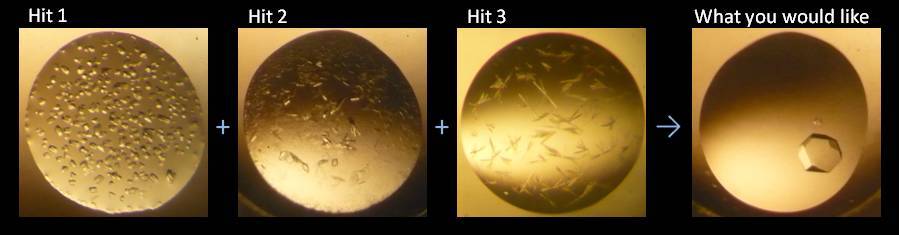
Imagine that you've run some screens and found the crystallization hits shown on the left. Now, somehow, you want to combine the ingredients of those three hits to get something like the crystal shown on the right.
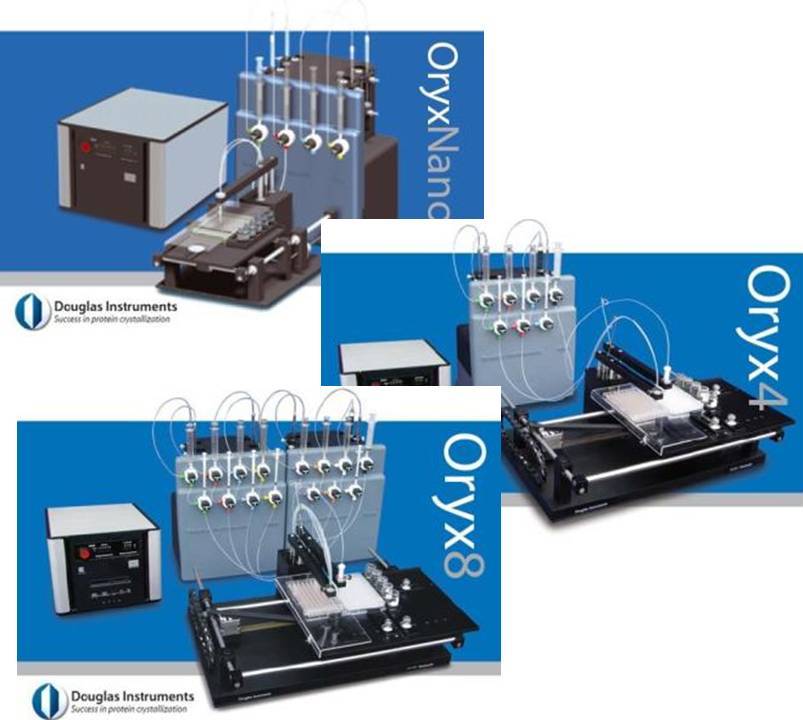
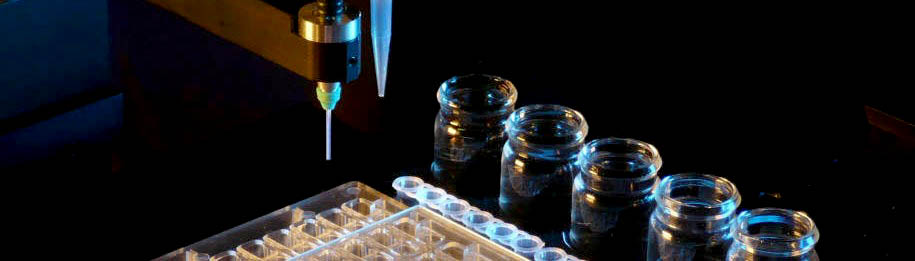
We've introduced a new script for the Oryx range of robots that can optimize crystallization by reshuffling the ingredients from several hits. (It's useful for seeding and ligand-binding experiments too - see below).
Say you've picked up needles or small crystals in the following conditions:
1. 30 % v/v PEG4000, 0.2M MgCl2, 0.1M TRIS, pH 8.5
2. 28 % v/v PEG400, 0.2M CaCl2, 0.1M HEPES, pH 7.5
3. 1.0M Na acetate, 0.1M imidazole, pH 6.5
Looking at these results, it's hard to draw up a plan for optimization. Is the best precipitant PEG, or a salt? If PEG, does the molecular weight matter? Are the bivalent cations Mg2+ and Ca2+ important? And which pH is best?
Our new script allows the precipitants to be dealt with separately from the other ingredients so that they can be reassorted. For example the best crystals might come from the high-lit ingredients above.
| 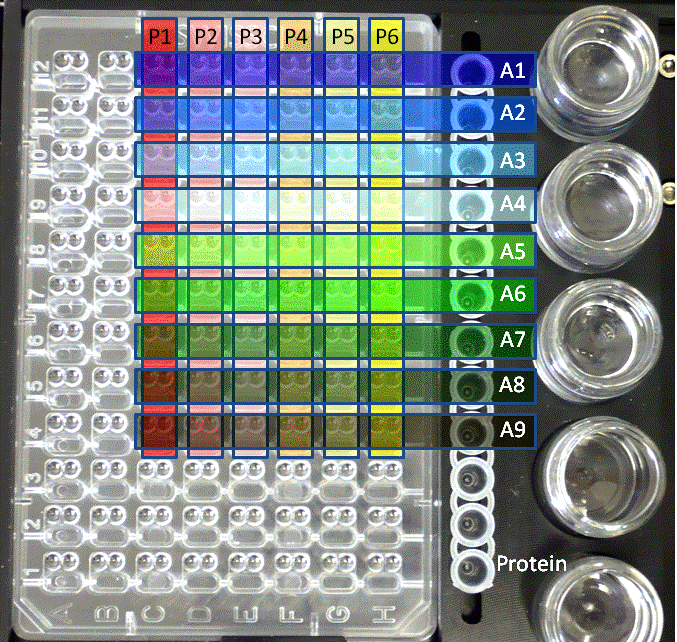 |
Over the years we've heard how successful "targeted" screens can be. The trouble was that they were time-consuming to set up, and - until now - separate robots were needed to make the screen and to set up the drops. The new Combinatorial Optimization script is based on a simple idea, but it allows a (systematic-type) targeted screen to be set up in 15 to 20 minutes.
Note that the same approach can be used for several other important experiments. For example, microseeding often gives too many crystals. Using the script, seed stocks with various dilutions can be added to one or more hit conditions. (Typically a dilution series would be set up, running from the "neat" seed stock to a 1:100,000 dilution.) The crystals below were optimized by Laura Cendron using a similar approach.
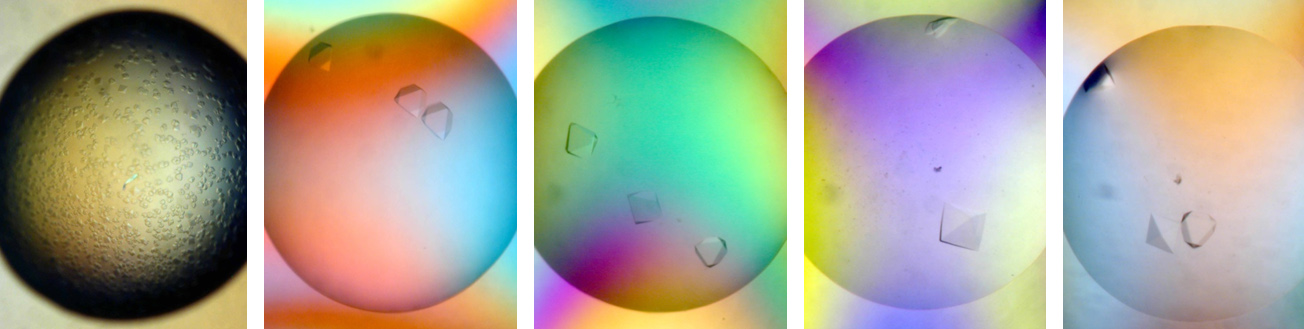
used to make the seed stock. Other images: crystals grown with seeding.
The same script can be used for additive experiments. For example, up to 12 ligands or inhibitors can be added to the twelve rows of the plate.
| ||||||