|
|
|

Introduction
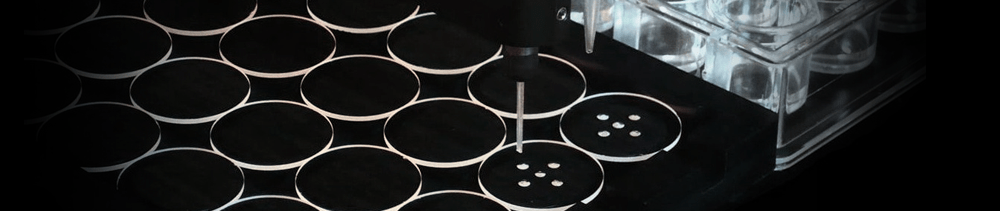
Oryx systems were originally developed for protein crystallization, but are increasingly being used for small molecule and inorganic crystallization.
With some small updates to the software and experimental setup, the systems can dispense small molecule and inorganic samples, including experiments with volatile solvents and water sensitive samples.
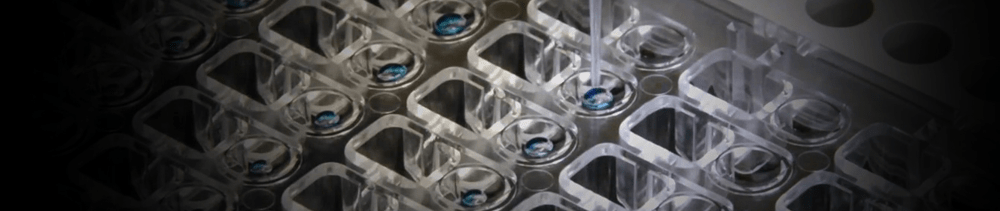
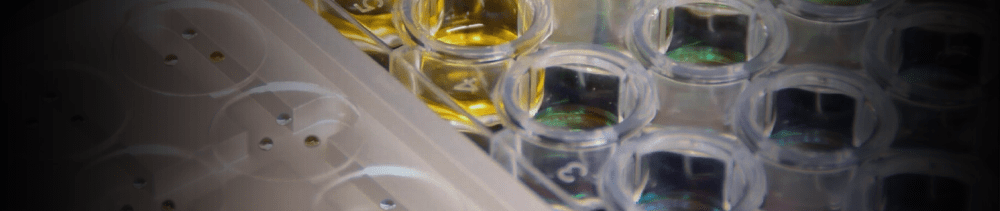
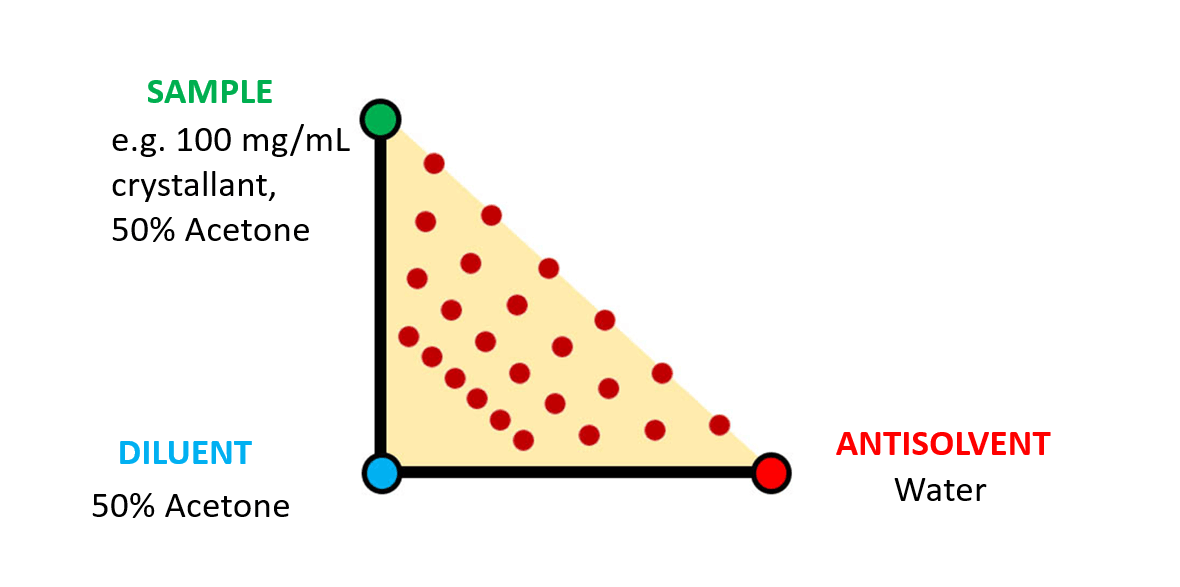
Robot HardwareThe Oryx system has several features that make it suitable for small molecule crystallization: Chemically resistant dispensing tips System fluid Plate compatibility Automatic oil dispensing Phase Diagram Experiment DesignThe Oryx system enables systematic exploration of crystallization conditions through controlled variation of concentration. Experiments are typically designed using three components:
The ingredients are dispensed simultaneously (or layered) in controlled ratios into each drop. By varying the proportions, the system samples a range of concentrations across the crystallization phase diagram. The experiment is designed to sample along trajectories that are approximately parallel to the expected solubility curve. This systematic approach makes it much easier to identify conditions that lead to nucleation and controlled crystal growth. SeedingSeeding can be incorporated into small molecule crystallization phase diagram experiments to improve reproducibility and crystal quality. The addition of seed crystals allows experiments to access the metastable region of the phase diagram. In this region:
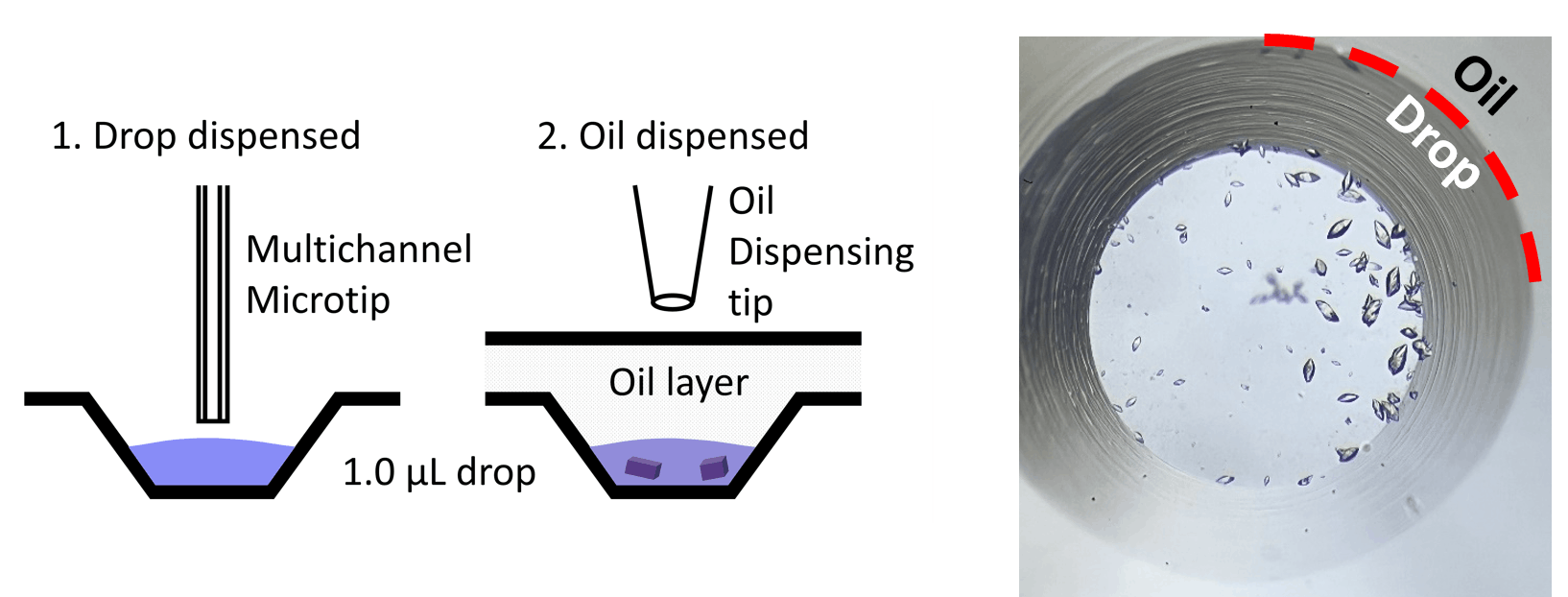
Crystals formed in the metastable zone typically grow more slowly and with improved morphology compared to those formed under highly supersaturated conditions. Seeding reduces stochastic nucleation events, enabling more predictable and reproducible outcomes across multiple wells. Automatic OilingEvaporation control is critical in small molecule crystallization, particularly when volatile organic solvents are used. The Oryx system automatically dispenses a layer of oil over each drop immediately after mixing. Commonly used oils include paraffin and silicone oil.
The oil layer:
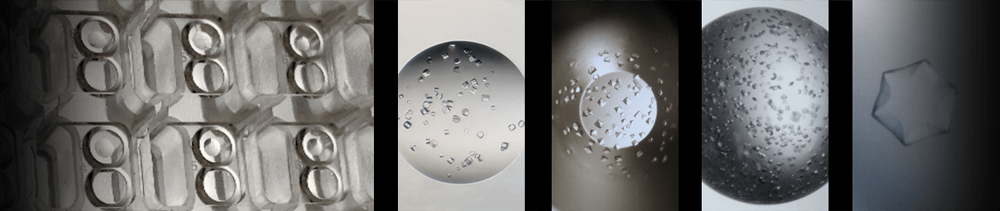
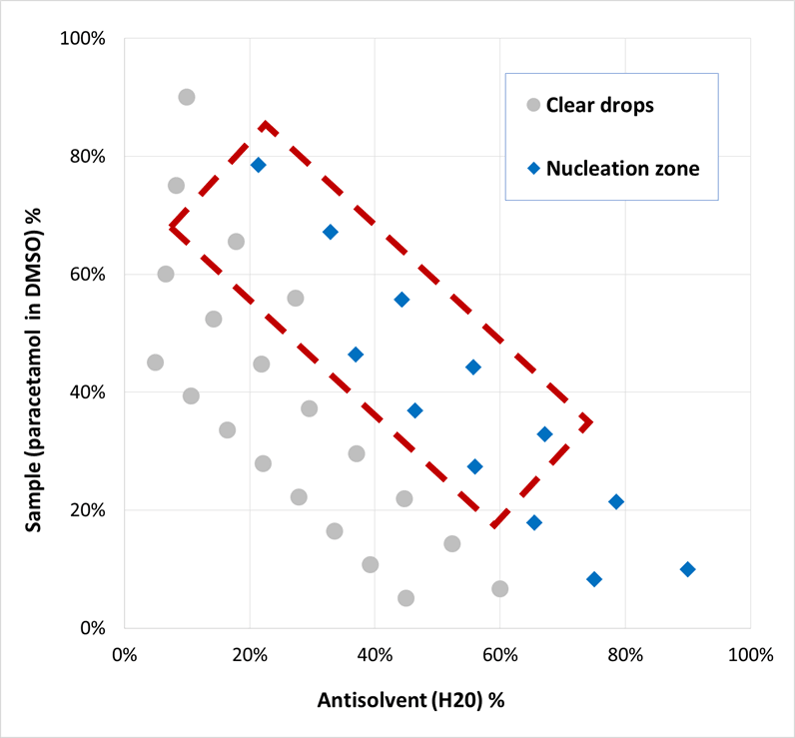
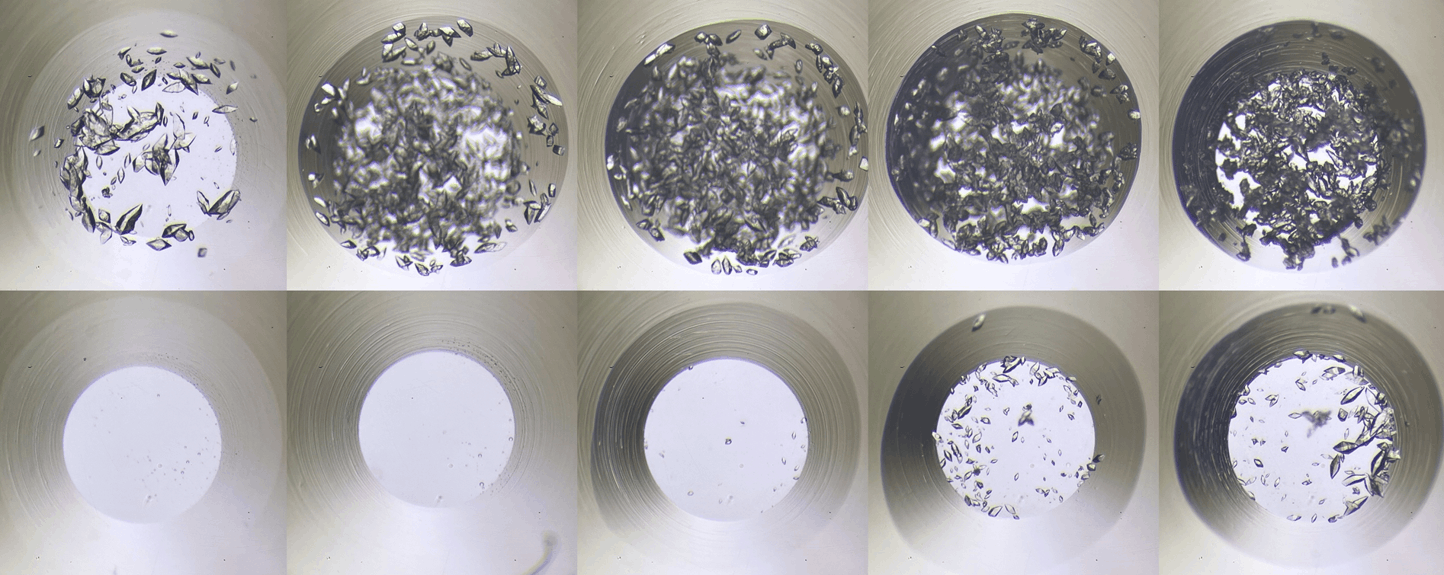
Case Study 1. ParacetamolParacetamol crystallization can be performed using standard phase diagram exploration. The system enables identification of conditions leading to different crystal morphology through controlled variation of solvent and antisolvent composition.
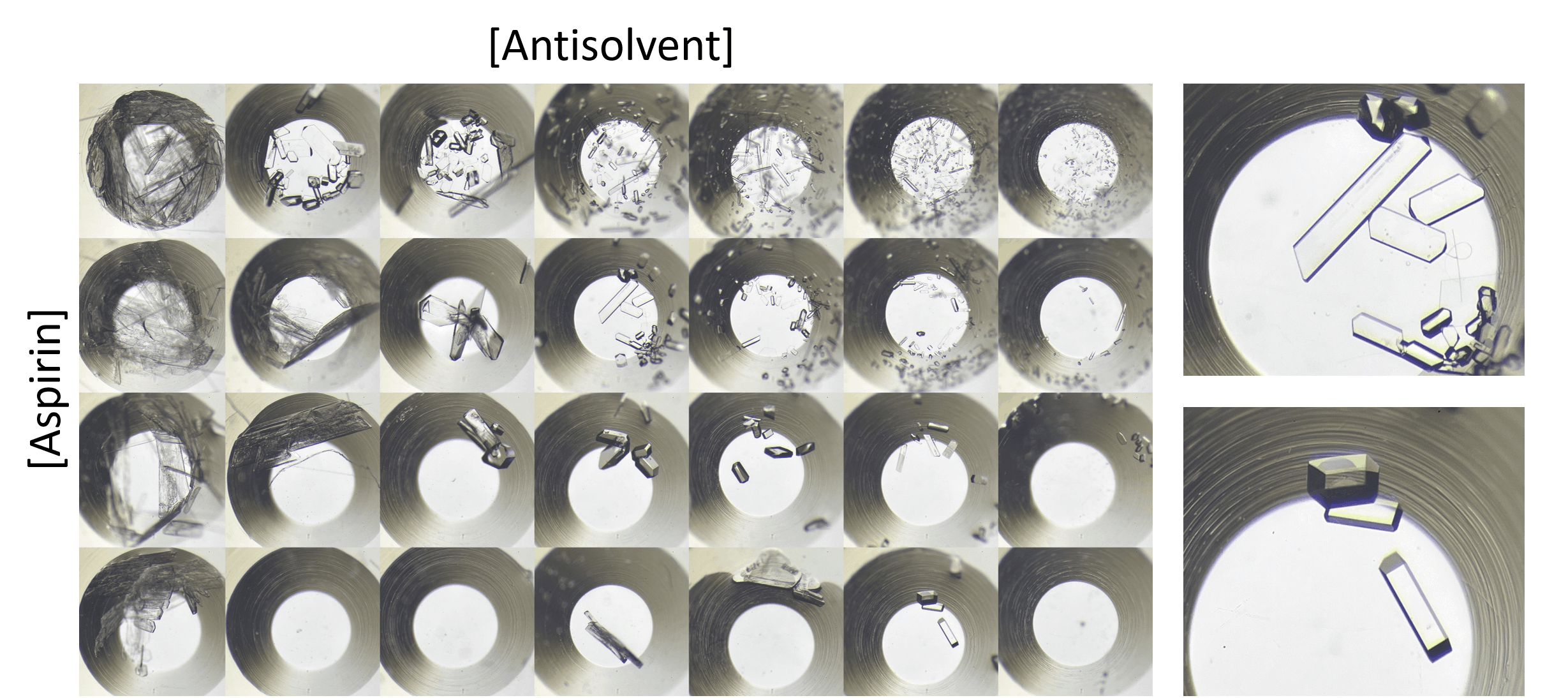
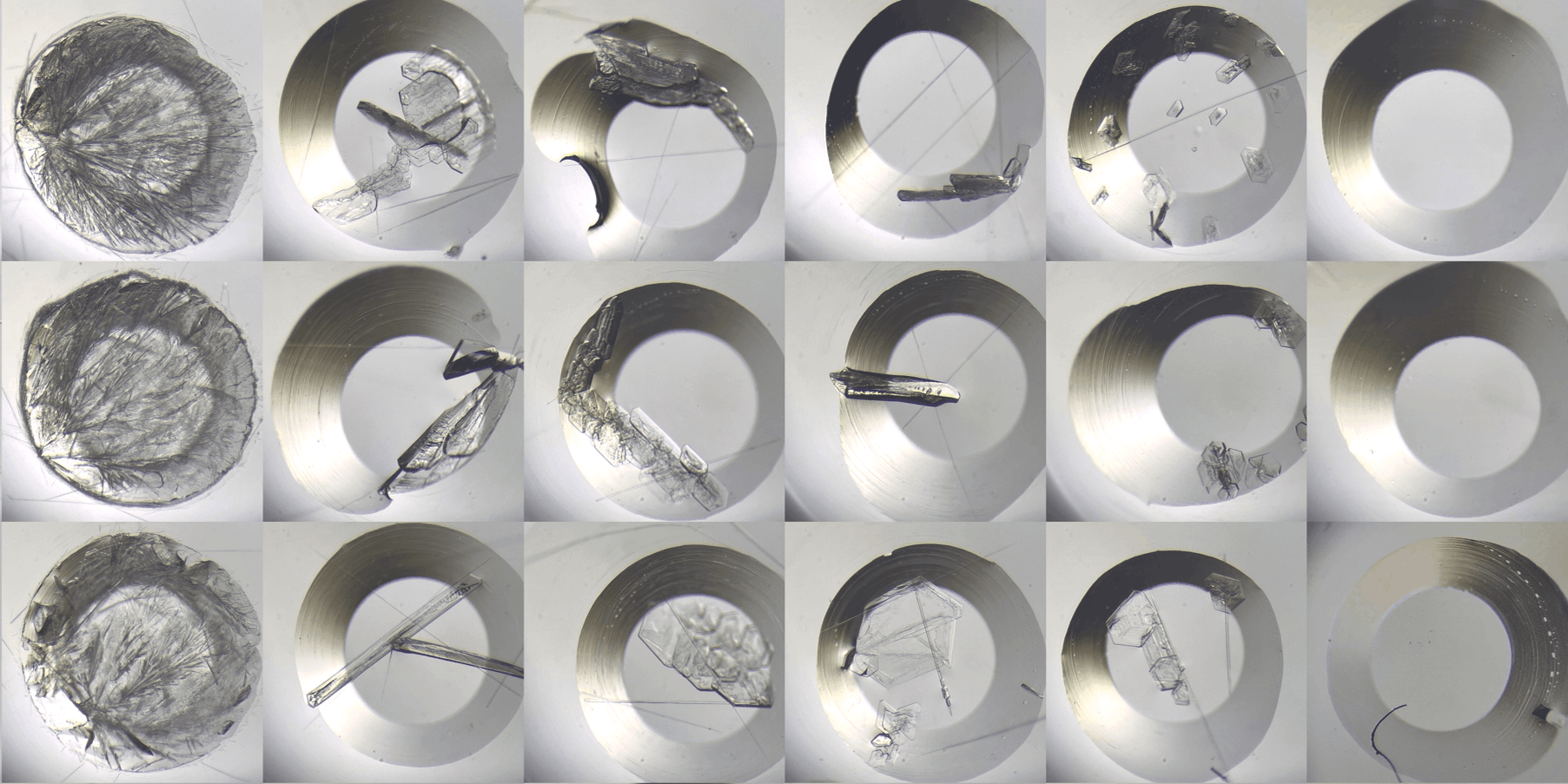
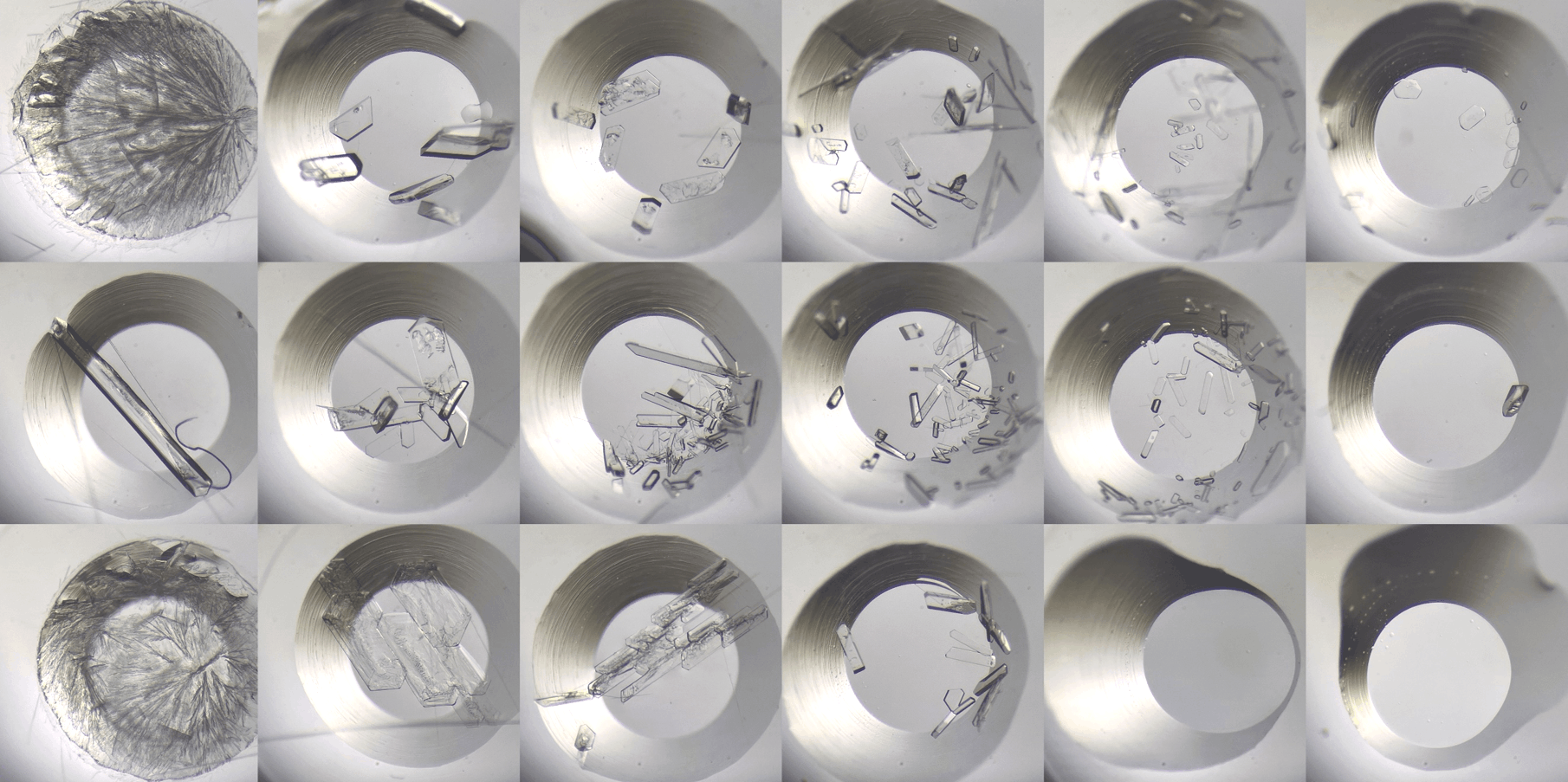
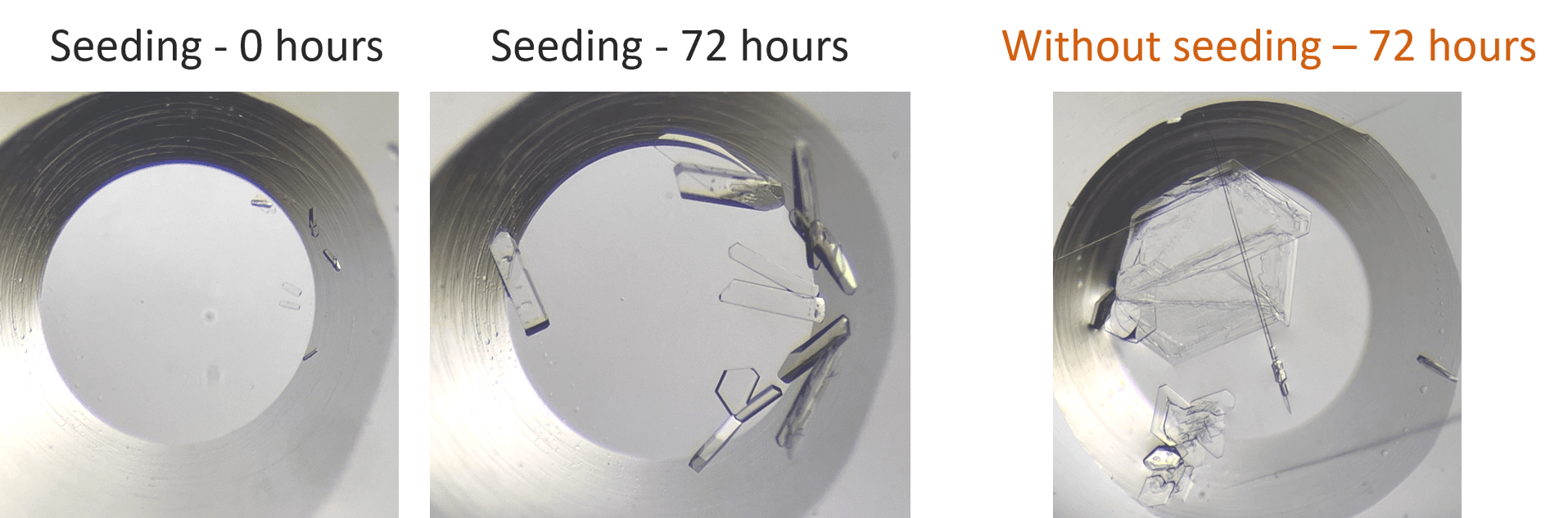
Case Study 2. Aspirin − Seeded Phase Diagram
Without seeding (above)
With seeding
Controlled Crystal Growth Over Time Using Seeding
Time-resolved observation of aspirin crystallization demonstrates:
|