|
|
|

Introduction
Oryx systems were originally developed for protein crystallization but can also be used for small molecule, peptide and inorganic crystallization.
Robot Hardware
|
| Plate | Points to consider |
|---|---|
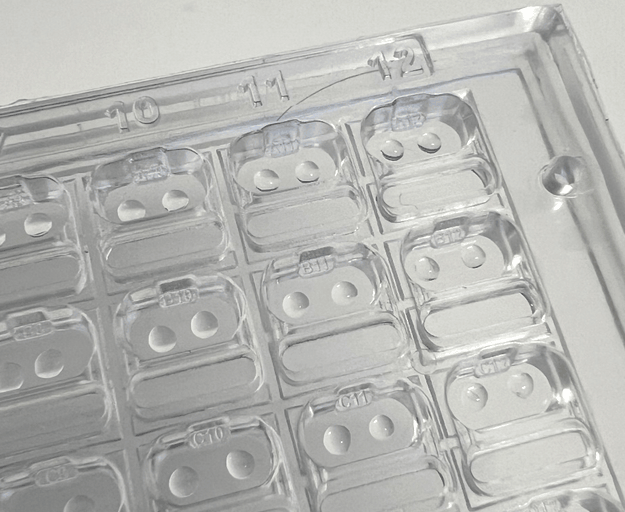
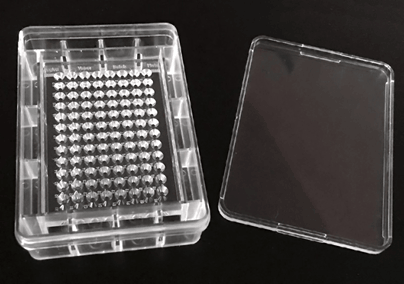
| Vapor Batch (VB) Polystyrene or Parylene-C-coated | Deeper drop wells for under-oil crystallization. Perimeter reservoir for vapor diffusion. The coated version is resistance to organic solvents (see table below). |
| Glass Sandwich | Good optics and broad solvent compatibility. Drop and oil volumes are limited, and harvesting can be difficult. |
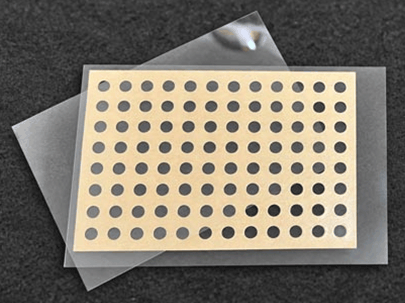
| MiTeGen In Situ-1 | Thin TOPAS COC film is suitable for some solvents, including DMSO. Drop spreading and oil overlay can be a problem. Suitable for in situ data collection. |
| Compact Jr | Polypropylene vapor diffusion sitting drop plate with deep drop well - good for solvents that tend to spread, and allows an oil overlay. |
Parylene-C-coated Vapor Batch plates. These are a coated version of the standard Vapor Batch plate, for improved compatibility with solvents such as dichloromethane, chlorobenzene, decane and hexane (see table below). Request a quotation for Parylene-C-coated Vapor Batch plates using our microbatch plate enquiry link. The coated version is not yet listed separately; please specify it in when enquiring.
| Solvent / oil | Vapor Batch PS(Polystyrene) | MiTeGen In Situ-1(TOPAS COC film) | Compact Jr(Polypropylene) | Vapor Batch coated(Parylene-C) | Glass Sandwich Plate(Glass) |
|---|---|---|---|---|---|
| Solvents | |||||
| DCM | |||||
| DMSO | |||||
| DMF | |||||
| ACN | |||||
| Acetone | |||||
| Chlorobenzene | |||||
| EtOH | |||||
| IPA | |||||
| Methanol | |||||
| Decane | |||||
| Hexane | |||||
| HCl | |||||
| NaOH | |||||
| Oils | |||||
| Paraffin oil | |||||
| Silicone oil | |||||
| Perfluorinated oil |

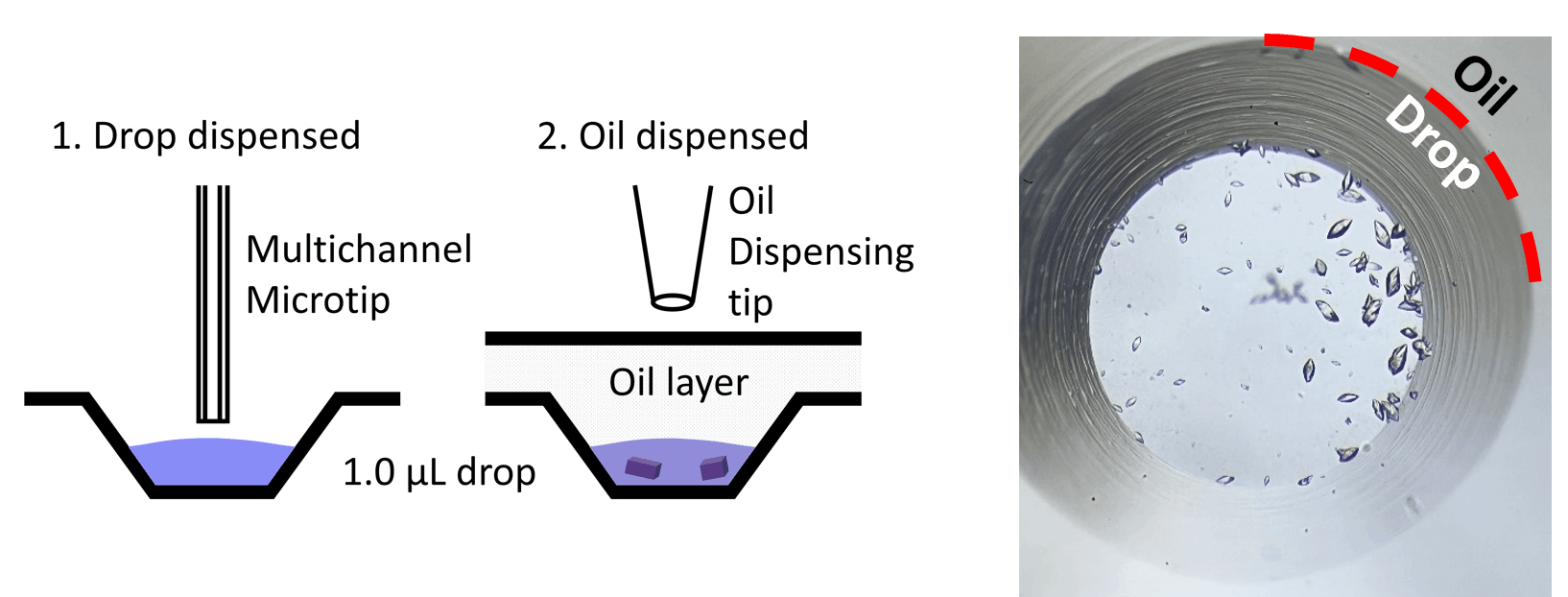
The automated phase diagram experiment tests different concentrations of sample, solvent and antisolvent to identify conditions that produce crystals, cause precipitation or remain clear. The results are used to build a phase diagram showing where crystallization occurs.
Optionally, crystal seeds can be added as an extra ingredient to identify the metastable zone, where seed crystals can grow but spontaneous nucleation does not occur.
Experiments are typically designed using three components:
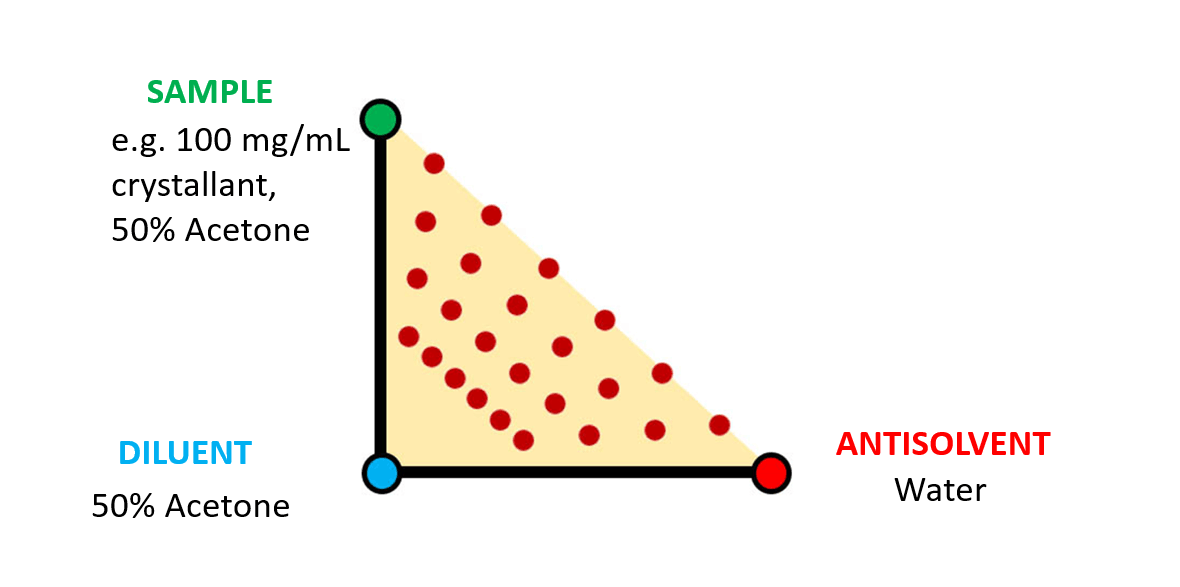
The ingredients are dispensed simultaneously (or layered) in controlled ratios into each drop. Video: overview of the Phase Diagram experiment.
By varying the proportions, the system samples a range of concentrations across the crystallization phase diagram. The experiment is designed to sample along trajectories that are approximately parallel to the expected solubility curve. This systematic approach makes it much easier to identify conditions that lead to nucleation and controlled crystal growth.
Example: case studies. See two example case studies using the Phase diagram experiment below including seeding
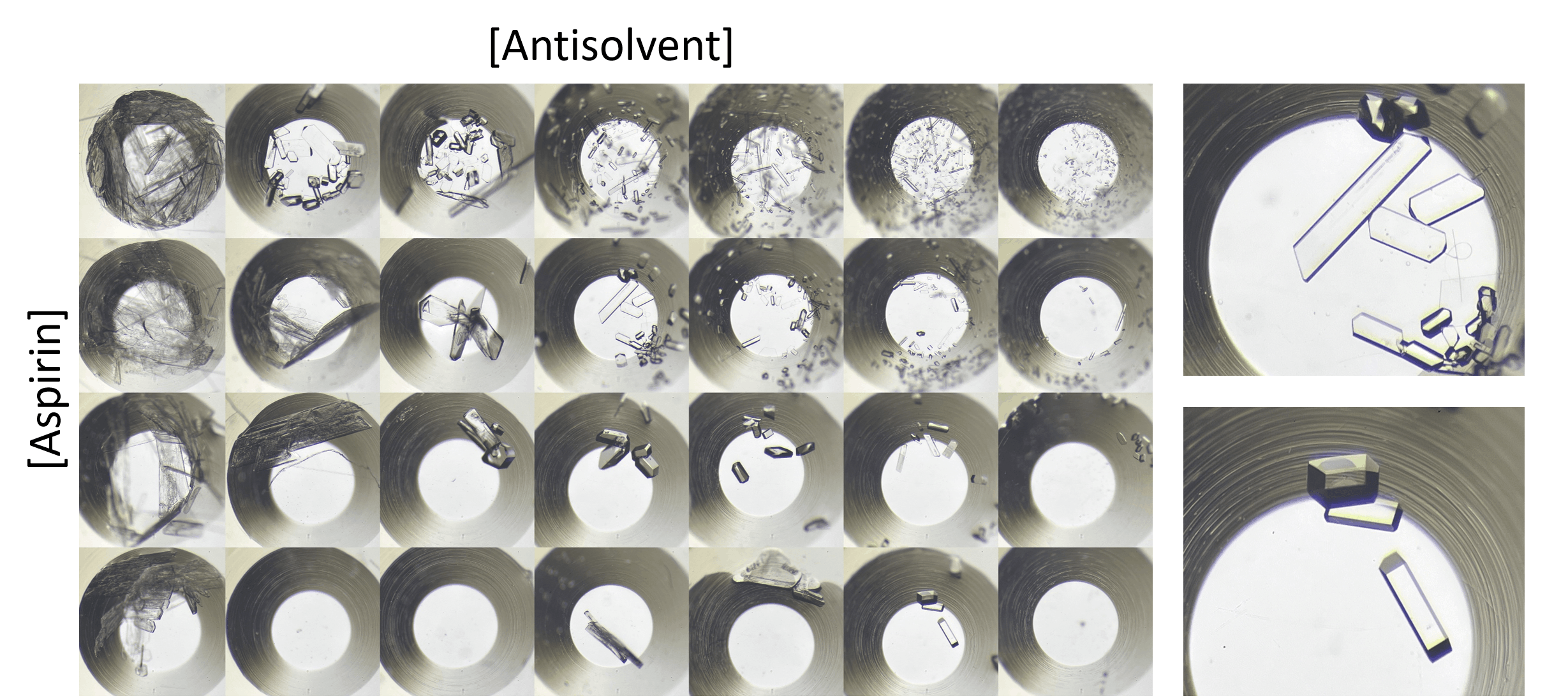
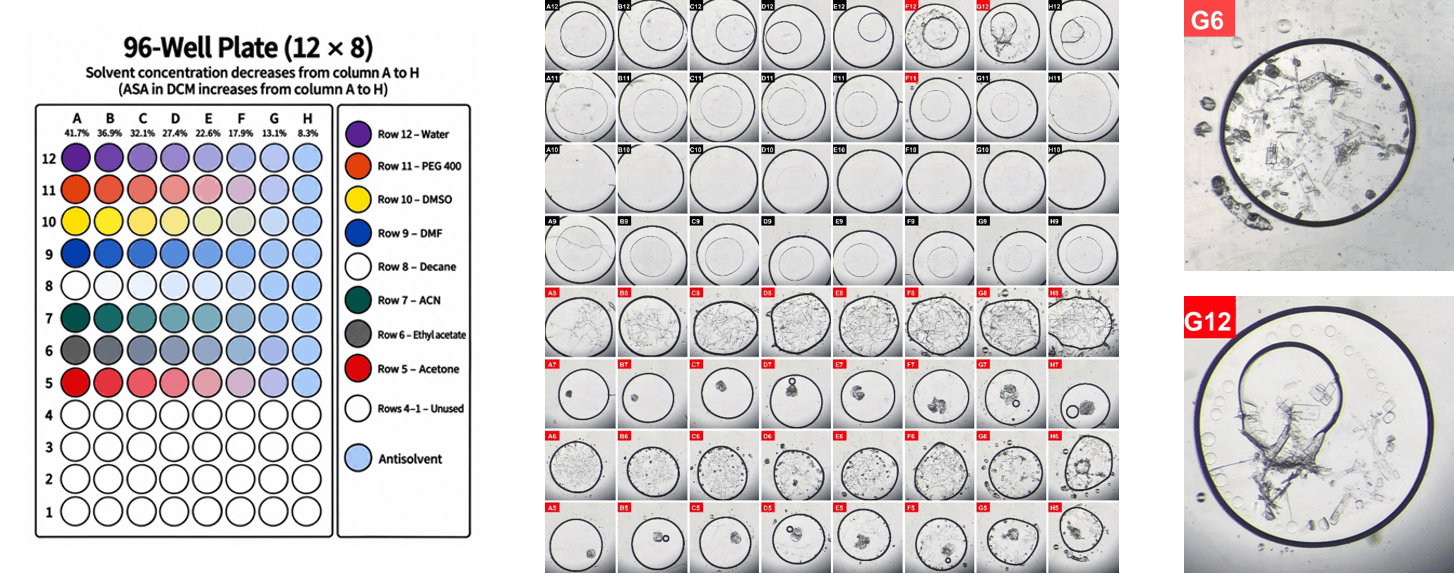
Oryx systems can dispense a different solvent to each row of a plate. Within each row, the proportions of sample solution and solvent can be varied to make a small concentration gradient, with an optional antisolvent or additive such as seed stock. This is known as solvent gradient screening. Up to eight solvents can be tested on one plate.
These experiments can be dispensed into glass sandwich plates, as shown below, or into other suitable plates including Vapor Batch plates. Drops can be covered automatically with oil.
Example: aspirin (acetylsalicylic acid) in dichloromethane (DCM). Eight test solvents were dispensed to separate rows of a glass sandwich plate. Across each row, the aspirin solution was increased from 50 to 250 nL and the test solvent decreased from 250 to 50 nL. Every well was covered with 300 nL of paraffin oil, giving a total of 600 nL per well (50% oil).
Seeding can be incorporated into phase diagram experiments and Solvent Gradient Screening to improve reproducibility and crystal quality.
The addition of seeds allows crystals to grow in conditions in metastable region of the phase diagram. In this region:
Crystals formed in the metastable zone typically grow more slowly and with improved morphology compared to those growing very quickly at high levels of supersaturation.
Example: case study. See example case study using the Phase diagram experiment below with seeding
Paracetamol crystallization can be performed using standard phase diagram exploration. The system enables identification of conditions leading to different crystal morphology through controlled variation of solvent and antisolvent composition.
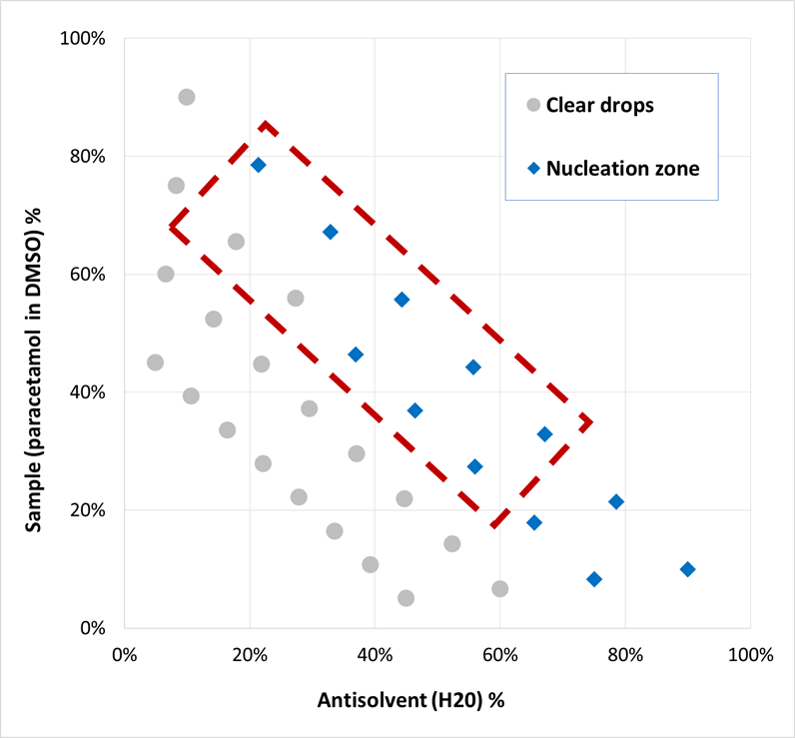
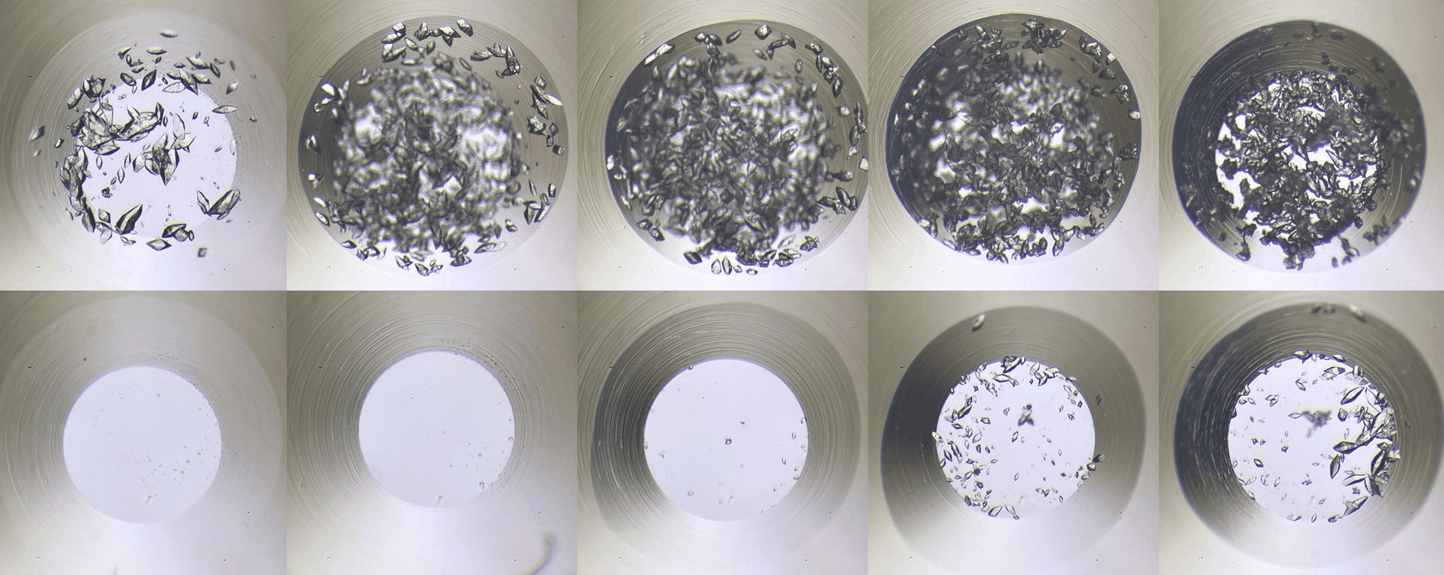
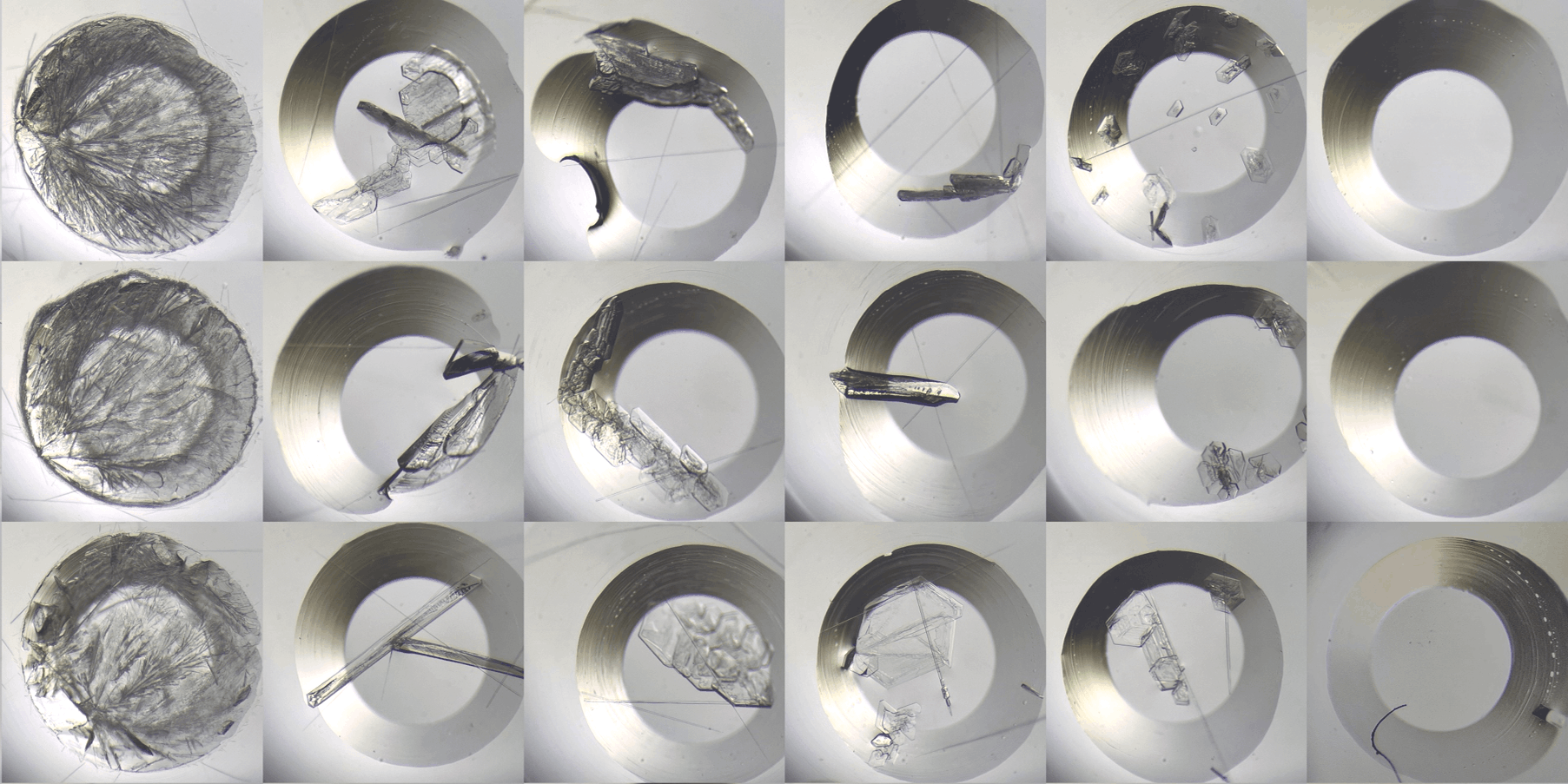
Without seeding (above)
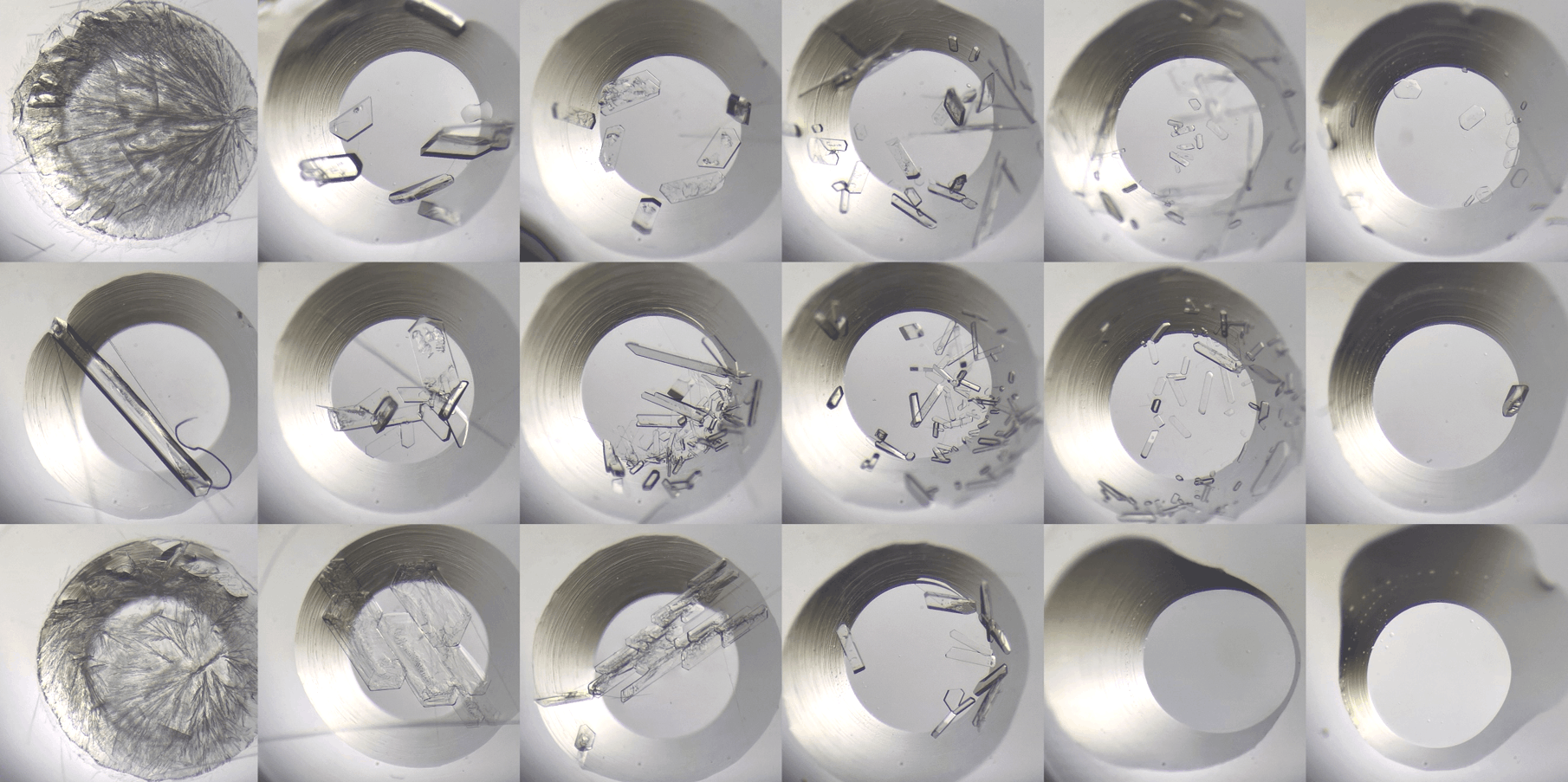
With seeding
Controlled Crystal Growth Over Time Using Seeding
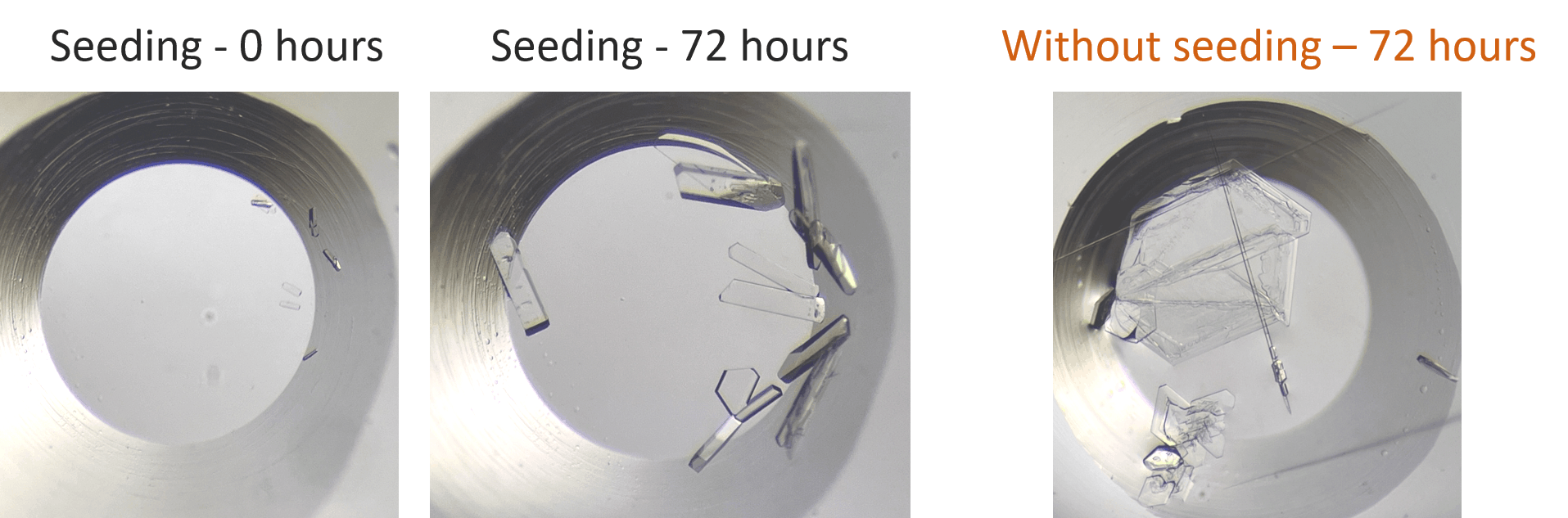
Time-resolved observation of aspirin crystallization demonstrates:
Request a webinar about crystallization with solvents